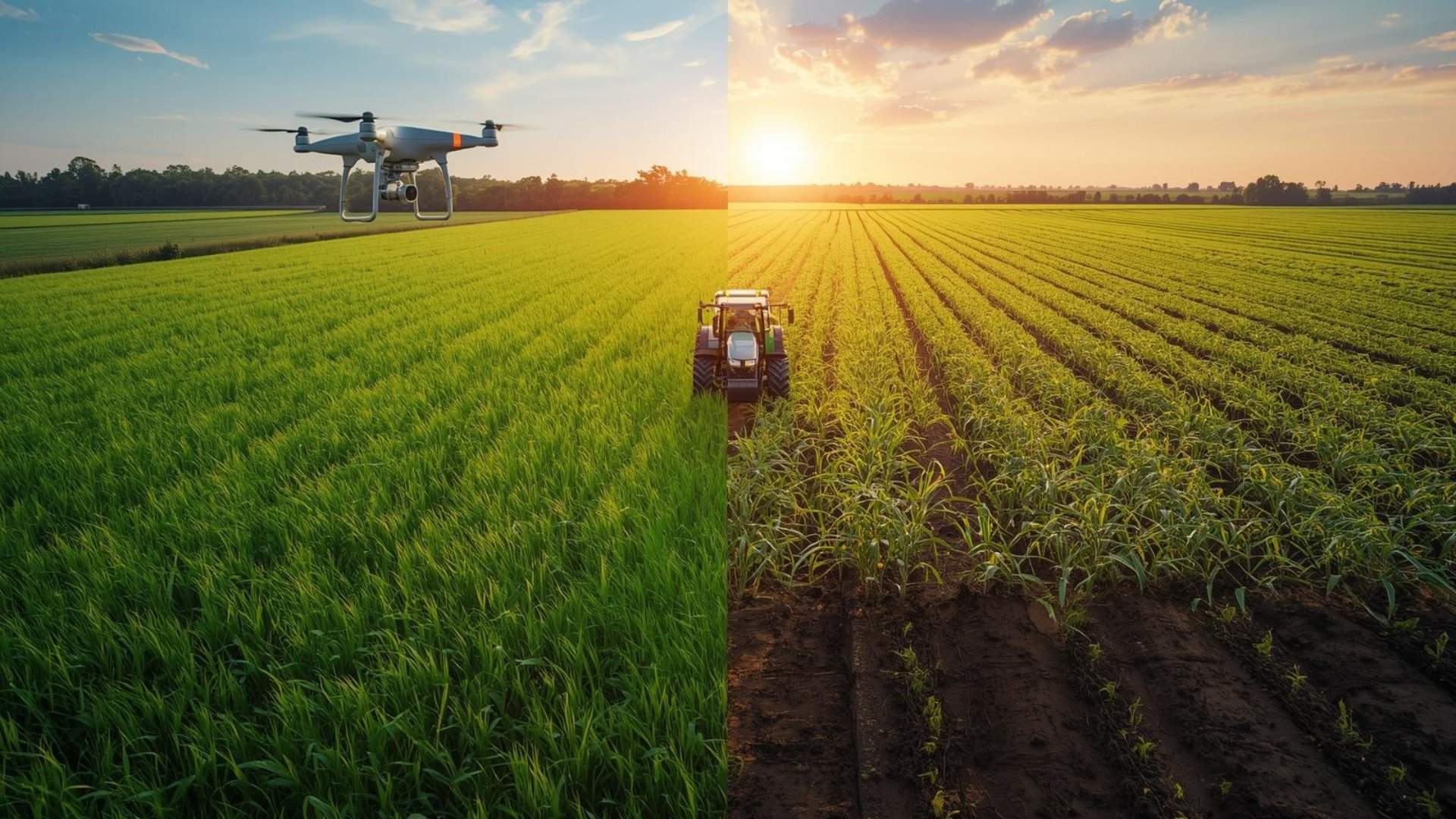
🌾 Key Statistics at a Glance
- 20-30% yield improvement with precision agriculture technologies
- 40-60% reduction in input waste using GPS and IoT systems
- $18 billion global AgTech market value in 2024
- 70% food production increase needed by 2050
As global population approaches 9.7 billion by 2050, farmers face unprecedented pressure to increase food production while combating climate change, soil degradation, and resource scarcity. The solution lies in agricultural technology—a revolutionary approach that combines precision agriculture, artificial intelligence, IoT sensors, and biotechnology to transform traditional farming into a data-driven, highly efficient operation.
Modern farming technology isn’t just about expensive equipment for large operations. Today’s solutions range from affordable soil sensors to AI-powered decision-making platforms, making advanced agriculture accessible to farms of all sizes. This comprehensive guide explores proven technologies that are delivering measurable results: 20-30% yield increases, 40-60% reduction in resource waste, and 25% cost savings for early adopters.
Understanding the Agricultural Technology Revolution
Agricultural technology (AgTech) encompasses the integration of cutting-edge digital tools into farming operations. Unlike traditional methods that rely on generalized approaches, technology-enabled farming uses real-time data, predictive analytics, and automated systems to make precise decisions about every aspect of crop production.
The global AgTech market has experienced explosive growth, reaching $18 billion in 2024 with a compound annual growth rate (CAGR) of 19% between 2020 and 2024. This rapid expansion reflects not just investment enthusiasm, but proven results: farms implementing precision agriculture technologies report yield improvements averaging 20-30% across cereal crops and up to 30% reduction in input costs.
Why Traditional Farming Methods Fall Short
Traditional farming practices face critical limitations in meeting modern challenges. Climate change has already reduced crop yields by up to 30% in vulnerable regions through unpredictable weather patterns, extreme events, and shifting growing seasons. Simultaneously, 33% of global soils have become degraded from overuse of agrochemicals, erosion, and poor management practices.
Urbanization consumes approximately 1.5 million hectares of arable land annually, while smallholder farmers—who produce 80% of food in developing countries—struggle with limited access to resources, information, and markets. These converging pressures demand a fundamental shift in how we approach agriculture.
Precision Agriculture: The Foundation of Technology-Enhanced Farming
Precision agriculture represents the cornerstone of modern farming technology. This approach uses GPS technology, sensors, drones, and data analytics to monitor field conditions and apply inputs (water, fertilizers, pesticides) with pinpoint accuracy. Rather than treating entire fields uniformly, precision agriculture recognizes and responds to variability within fields.
GPS-Guided Equipment and Auto-Steering Systems
GPS-guided tractors and harvesters eliminate overlaps and gaps during field operations, reducing input waste by 15-20%. Auto-steering systems allow operators to maintain precise paths within 2.5 centimeters, dramatically improving efficiency while reducing operator fatigue. These systems have achieved widespread adoption, with 70% of large-scale crop farms and 52% of midsize farms using guidance systems as of 2023.
The technology pays for itself quickly. Farmers report fuel savings of 10-15%, reduced seed and fertilizer costs of 5-10%, and the ability to work longer hours with less physical strain. For a typical 500-acre operation, annual savings can reach $10,000-$15,000.
| Technology | Yield Improvement | Resource Savings | Cost Reduction |
|---|---|---|---|
| Precision Agriculture (GPS/IoT) | 20-30% | 40-60% input waste reduction | 30% reduction |
| Smart Irrigation Systems | 15-25% | 40-60% water efficiency | 35% water costs |
| Biotechnology (CRISPR/GMO) | 10-20% | 50% pesticide reduction | 25% input costs |
| Automation & Robotics | 10-15% | 25% downtime reduction | 25% labor costs |
| Vertical Farming | 1,000-2,000% | 95% land & water savings | Variable |
| AI-Driven Pest Control | 5% quality & yield | 30-40% pesticide reduction | 20% pest management |
Variable Rate Technology (VRT)
Variable Rate Technology enables farmers to apply different amounts of inputs across different zones within a single field. By analyzing soil samples, yield maps, and sensor data, VRT systems create prescription maps that guide equipment to deliver precisely what each zone needs.
A farmer might discover that one section of a field requires 150 pounds of nitrogen per acre while another needs only 100 pounds. VRT applies these rates automatically, optimizing crop nutrition while preventing over-application that wastes money and harms the environment. Studies show VRT adoption results in 15-25% fertilizer savings while maintaining or improving yields.
Internet of Things (IoT): Creating the Connected Farm
The Internet of Things has transformed agriculture by creating networks of connected sensors that continuously monitor field conditions. The global agricultural IoT market reached $28.65 billion in 2024 and is projected to grow at 10.5% CAGR through 2030, driven by proven results and declining costs.
Soil Monitoring Sensors
Smart soil sensors measure moisture levels, temperature, pH, nutrient content, and electrical conductivity in real-time. These battery-powered devices transmit data wirelessly to central platforms, enabling farmers to monitor soil conditions across entire operations from a smartphone.
The impact is substantial: farmers using soil sensors reduce irrigation water usage by 30-50% by applying water only when and where needed. Nutrient monitoring prevents over-fertilization, cutting fertilizer costs by 20-30% while improving environmental outcomes. A study of farms using IoT soil sensors found ROI within 18-24 months for most operations.
Weather Stations and Environmental Monitoring
IoT-enabled weather stations positioned throughout farms collect hyperlocal data on temperature, humidity, rainfall, wind speed, and solar radiation. Unlike regional forecasts, on-farm weather stations provide the specific information needed for precise decision-making.
These systems enable predictive analytics: machine learning algorithms analyze historical weather patterns alongside current conditions to forecast optimal planting dates, irrigation timing, and harvest windows. Farmers report 10-15% yield improvements simply from better-timed operations based on precise weather data.
Automated Irrigation Management
Smart irrigation systems combine soil moisture sensors, weather data, and crop water requirement algorithms to automate watering schedules. These systems activate irrigation only when soil moisture drops below optimal levels for specific crops and growth stages.
The water savings are dramatic: smart irrigation reduces water usage by 40-60% compared to traditional scheduling methods. In water-scarce regions or operations paying premium rates for irrigation water, these systems deliver ROI within a single growing season. Additionally, preventing over-watering reduces disease pressure and nutrient leaching, creating multiple benefits beyond water conservation.
Artificial Intelligence and Machine Learning in Agriculture
Artificial intelligence has emerged as perhaps the most transformative technology in modern agriculture. AI systems analyze vast datasets—satellite imagery, sensor readings, weather patterns, historical yields—to identify patterns invisible to human observation and generate actionable insights.
AI-Powered Crop Monitoring and Disease Detection
Computer vision systems trained on millions of plant images can identify diseases, pest infestations, and nutrient deficiencies with 95%+ accuracy. Farmers photograph suspicious plants with smartphones; AI systems instantly diagnose the issue and recommend treatment protocols.
Early detection is crucial: catching diseases in their initial stages prevents spread and reduces treatment costs by 60-80%. The Trapview AI pest identification system has documented over 60 pest species and reports that customers achieve 5% yield and quality improvements through timely, targeted pest control.
Precision agriculture technologies represent the single most important advancement in farming since mechanization. We’re seeing farms of all sizes achieve 20-30% yield improvements while simultaneously reducing environmental impact. The key is starting with one technology—like soil sensors or GPS guidance—proving the value, then expanding from there. The farms succeeding today aren’t necessarily the largest, but those willing to embrace data-driven decision making.
Predictive Analytics and Yield Forecasting
Machine learning models trained on historical farm data can predict yields with 85-92% accuracy weeks or months before harvest. These forecasts enable better planning for harvest labor, storage capacity, and marketing strategies.
AI systems also optimize planting decisions by analyzing soil conditions, weather forecasts, market prices, and crop rotation history to recommend the most profitable crop choices for each field. Farms using AI-driven decision support systems report 3x higher first-year ROI compared to traditional planning methods.
Drone Technology and Aerial Imaging
Agricultural drones equipped with multispectral cameras capture imagery beyond human vision, detecting plant stress, water deficiency, and nutrient issues days or weeks before visible symptoms appear. The FAA’s 2024 approval allowing drone swarms to operate at night without visual observers has accelerated adoption.
Drones provide actionable insights at a fraction of traditional scouting costs. A single drone can survey 50-100 acres per hour, generating detailed maps that identify problem areas requiring attention. Farmers using drone-based scouting reduce crop losses by 10-15% through earlier intervention.
Biotechnology and Genetic Innovations
Biotechnology represents the frontier of crop improvement, using genetic tools to develop varieties with superior yields, stress tolerance, and nutritional profiles. The global agricultural biotechnology market reached $107.86 billion in 2023 and is growing at 9.6% annually.
CRISPR Gene Editing Technology
CRISPR-Cas9 gene editing allows precise modifications to plant DNA without introducing foreign genes. This technology has created drought-tolerant corn that maintains yields through water stress, rice with 30% higher zinc content addressing malnutrition, and wheat resistant to fungal diseases that previously caused $2 billion in annual losses.
Unlike traditional GMO crops, CRISPR-edited plants often face fewer regulatory hurdles because they could theoretically be achieved through conventional breeding—just much more slowly. This accelerated approval process means farmers gain access to improved varieties years faster.
Disease and Pest Resistant Varieties
Genetically improved crops that resist specific pests or diseases reduce pesticide applications by 30-50%, cutting costs while improving environmental outcomes. Bt cotton, engineered to produce natural insecticidal proteins, has reduced insecticide use by 35-40% while increasing yields 10-20% across millions of acres.
The economic impact extends beyond the farm: reduced pesticide applications mean lower health risks for farmworkers, less chemical runoff into waterways, and preservation of beneficial insect populations. These cascading benefits demonstrate how agricultural technology delivers returns far beyond simple yield increases.
Cumulative yield improvement from technology adoption (projected)
Automation and Robotics in Modern Farming
Agricultural robotics addresses one of farming’s most pressing challenges: labor shortages. Rural populations decline while farm sizes increase, creating an unsustainable labor equation. Robots offer a solution that works around the clock without fatigue.
Autonomous Tractors and Equipment
Self-driving tractors equipped with GPS, LIDAR, and computer vision navigate fields independently, executing pre-programmed tasks with precision. These machines operate 24 hours daily during critical periods like planting and harvest, maximizing productivity during optimal weather windows.
Beyond extended operating hours, autonomous equipment eliminates human error and ensures consistent performance. Field operations complete faster with 25% less downtime and 15-20% lower fuel consumption through optimized routing and speed management.
Robotic Harvesting Systems
Harvesting robots use AI-powered computer vision to identify ripe produce, assess quality, and pick with appropriate force to prevent damage. While still developing for many crops, commercial systems for strawberries, apples, and lettuce demonstrate 90%+ picking accuracy at speeds approaching human harvesters.
The business case is compelling: robotic harvesters operate around the clock during peak ripeness, reducing losses from delayed harvest. They also address labor availability—many farms report difficulty finding seasonal workers even at premium wages. Initial costs remain high ($250,000-$500,000 per unit), but ROI calculations show breakeven within 3-5 years for mid-sized operations.
Automated Weed Control
Robotic weeders equipped with camera systems and precision herbicide applicators identify weeds among crop plants and apply spot treatments. This targeted approach reduces herbicide usage by 90% compared to broadcast spraying while achieving superior weed control.
Some advanced systems use mechanical removal rather than chemicals, appealing to organic operations and addressing herbicide resistance concerns. The Blue River Technology “See & Spray” system has treated over 100 million acres, saving farmers millions in input costs while reducing environmental impact.
Vertical Farming and Controlled Environment Agriculture
Vertical farming reimagines agriculture by growing crops in stacked layers within climate-controlled facilities. While not suitable for all crops, this technology excels at producing leafy greens, herbs, and certain vegetables with remarkable efficiency.
The statistics are striking: vertical farms produce 100-400 times more food per acre than traditional farming while using 95% less water and zero pesticides. Year-round production eliminates seasonal fluctuations, providing consistent supply to urban markets with minimal transportation costs and emissions.
LED Lighting and Climate Control
Modern vertical farms use LED lights tuned to specific wavelengths that optimize photosynthesis and nutrient content. Climate control systems maintain ideal temperature and humidity while CO2 enrichment accelerates growth. These precisely controlled conditions reduce growing cycles by 30-50%—lettuce that takes 60 days in fields matures in 30-35 days in vertical farms.
The technology remains capital-intensive, with facility construction costs of $1,500-$2,500 per square meter. However, premium pricing for pesticide-free, ultra-fresh produce and multiple annual harvests create viable economics for operations serving high-value urban markets.
Urban Agriculture and Food Security
Vertical farms excel in urban environments, producing food within miles of consumers rather than hundreds of miles away. This proximity dramatically reduces food waste—lettuce arriving at grocery stores within 24 hours of harvest stays fresh for 14-21 days versus 7-10 days for conventionally grown produce that travels for days.
Cities worldwide recognize vertical farming’s potential for food security and economic development. Urban farms create local jobs, reduce transportation emissions, and ensure food access during supply chain disruptions—benefits demonstrated dramatically during the COVID-19 pandemic.
Data Management and Farm Management Software
All these technologies generate enormous data volumes—the challenge becomes transforming data into actionable decisions. Farm Management Information Systems (FMIS) serve as the central nervous system, integrating information from sensors, equipment, weather stations, and financial records into unified platforms.
Integrated Farm Management Platforms
Modern FMIS platforms provide dashboards showing real-time farm status: soil moisture levels, equipment location, task completion, weather forecasts, and financial performance. Farmers access this information from smartphones, making informed decisions without visiting every field.
The platforms also automate record-keeping for regulatory compliance, generate reports for lenders and auditors, and track sustainability metrics increasingly demanded by buyers. Operations using comprehensive FMIS report 20-25% time savings on administrative tasks and 10-15% better resource allocation through improved information flow.
Cloud Computing and Edge Computing
Cloud-based agricultural platforms enable small and medium farms to access sophisticated analytics without massive IT investments. Farmers upload data from equipment and sensors; cloud servers run complex algorithms and return recommendations via mobile apps.
Edge computing processes time-critical data locally—autonomous tractors and harvesting robots make split-second decisions using onboard computing rather than waiting for cloud responses. The combination of edge and cloud computing optimizes both responsiveness and analytical power.
🔑 Key Takeaways for Implementation Success
- Start with one technology that addresses your operation’s biggest constraint—water, labor, or input costs—and prove ROI before expanding
- Prioritize technologies with 18-24 month payback periods like soil sensors, GPS guidance, or weather stations for quick wins
- Invest in quality training—technology adoption fails more often from inadequate training than technical limitations
- Choose platforms that integrate with other systems to avoid data silos and maximize insights from multiple sources
- Participate in farmer networks or technology demonstration programs to learn from others’ experiences before committing capital
- Consider leasing or shared ownership models for expensive equipment like drones or autonomous tractors
- Monitor technology ROI systematically—track not just yields but labor savings, input reductions, and risk mitigation benefits
Overcoming Barriers to Technology Adoption
Despite proven benefits, technology adoption faces real barriers that must be addressed for widespread implementation.
Cost and Return on Investment
Initial investment costs deter many farmers, particularly smaller operations. While GPS guidance systems cost $8,000-$15,000 and soil sensors $200-$500 each, these represent significant outlays for farms operating on thin margins.
The solution lies in starting small and demonstrating value. Farmers should calculate total cost of ownership including maintenance and subscriptions, but also quantify benefits: reduced input waste, yield improvements, labor savings, and risk reduction. Government programs and agricultural lenders increasingly offer favorable financing for technology investments based on their documented returns.
Digital Literacy and Training
Agricultural technology requires new skills that challenge farmers accustomed to mechanical work. Effective training programs must respect farmers’ expertise while building confidence with digital tools.
Successful approaches include hands-on workshops where farmers work with actual equipment, peer learning networks where experienced users mentor newcomers, and ongoing technical support during critical periods. Equipment dealers and technology companies that provide comprehensive training see 2-3x higher adoption rates than those offering only technical documentation.
Infrastructure Challenges
Rural broadband connectivity remains inadequate in many agricultural regions, limiting access to cloud-based services. While 5G networks and satellite internet (including Starlink) improve availability, gaps persist.
Edge computing and hybrid systems partially address connectivity issues by processing critical data locally and synchronizing with cloud services when connections allow. Advocacy for rural broadband expansion remains crucial—reliable internet access has become as essential as roads and electricity for modern farming.
Environmental and Sustainability Benefits
Agricultural technology delivers environmental benefits that extend far beyond individual farms, addressing some of agriculture’s most significant ecological challenges.
Resource Conservation
Precision agriculture dramatically reduces water consumption through smart irrigation that applies water only when and where needed. Farms using soil moisture sensors and automated irrigation reduce water usage by 40-60%—crucial in water-scarce regions where agriculture consumes 70% of freshwater resources.
Fertilizer and pesticide reductions offer similar benefits. Variable rate application prevents over-application that leads to nutrient runoff, a major cause of water pollution and ocean dead zones. Reducing nitrogen fertilizer use by 20-30% through precision management prevents thousands of tons of nitrates from contaminating waterways annually.
Carbon Footprint Reduction
Agricultural technology helps mitigate climate change through multiple pathways. Precision equipment reduces fuel consumption by 10-15% through optimized routing and eliminated overlaps. Reduced tillage enabled by herbicide-resistant crops and robotic weeders sequesters more carbon in soil. Vertical farming eliminates transportation emissions for urban produce markets.
Combined, these improvements position agriculture as part of the climate solution. A 200-acre corn farm implementing comprehensive precision agriculture reduces annual CO2 emissions by approximately 50-75 tons—equivalent to taking 10-15 cars off the road.
Biodiversity and Soil Health
Reduced pesticide usage through targeted application and pest-resistant varieties protects beneficial insects, particularly pollinators critical for many crops. Precision agriculture also promotes soil health through better nutrient management and reduced compaction from optimized equipment paths.
Healthy soils with robust microbial communities resist erosion, retain water more effectively, and support higher yields—creating a positive feedback loop where technology-enabled practices improve the foundation of agricultural productivity.
The Future of Agricultural Technology
Agricultural technology continues evolving rapidly, with emerging innovations promising even greater impact in coming years.
Artificial General Intelligence and Advanced Robotics
Next-generation AI systems will manage entire farm operations autonomously, making complex decisions about planting, irrigation, pest control, and harvest timing based on synthesis of thousands of data points. These systems will operate more like experienced farm managers than simple automation.
Advanced robots will handle delicate tasks currently requiring human judgment—pruning, grafting, and quality assessment. As costs decline through mass production, robotics will become accessible to smaller operations currently priced out of the market.
Blockchain and Supply Chain Transparency
Blockchain technology creates immutable records of agricultural practices, enabling consumers to verify organic certification, sustainability claims, and origin information. This transparency commands premium prices while building consumer trust.
Smart contracts on blockchain platforms can automate payments when crops meet quality specifications verified by IoT sensors, reducing transaction costs and disputes. Early implementations in coffee, cocoa, and grain trading demonstrate viability.
Nanotechnology and Advanced Materials
Nanomaterial-based sensors will detect plant diseases at molecular levels days before visible symptoms, enabling truly preventive rather than reactive management. Nano-encapsulated fertilizers will release nutrients in response to plant signals, eliminating waste and environmental runoff.
These technologies remain largely in research phases but show promise for addressing agricultural challenges that current solutions handle imperfectly.
Frequently Asked Questions About Crop Yield Technology
📚 Further Reading and Resources
Explore these resources to deepen your understanding of agricultural technology and stay current with industry developments:
Precision Agriculture Research
Academic journals and research papers on precision agriculture technologies, efficacy studies, and implementation case studies from major agricultural universities.
AgTech Industry Reports
Market analysis, technology trends, and investment patterns in agricultural technology sectors from industry analysts and consulting firms.
Government Agricultural Technology Programs
Information about federal and state programs offering financing, grants, and technical assistance for technology adoption on farms.
Farmer Technology Networks
Peer learning groups, online forums, and local cooperatives where farmers share experiences, troubleshoot challenges, and evaluate new technologies.
Agricultural Extension Services
University extension programs offering workshops, demonstrations, and one-on-one consultations on implementing agricultural technologies.
Technology Vendor Comparisons
Independent reviews and comparisons of agricultural technology products, including pricing, features, and user experiences.
The future of agriculture isn’t about replacing farmers with robots—it’s about empowering farmers with tools that multiply their effectiveness. A farmer equipped with sensors, AI analytics, and precision equipment can manage larger operations more sustainably while making better decisions than ever before. The farms thriving ten years from now will be those that embrace this technological evolution while maintaining the agricultural expertise that has fed humanity for millennia.
Conclusion: Embracing the Agricultural Technology Revolution
Agricultural technology represents humanity’s best strategy for meeting escalating food demands while addressing environmental challenges. The statistics are compelling: 20-30% yield improvements, 40-60% resource savings, and 25-30% cost reductions demonstrate that technology delivers measurable value across diverse farming operations.
Success requires strategic implementation. Farmers should start with technologies addressing their most pressing constraints—whether water scarcity, labor shortages, or input costs. Choose systems with proven ROI and comprehensive training support. Participate in farmer networks to learn from others’ experiences and avoid costly mistakes.
The transition to technology-enabled farming will define agriculture’s next chapter. Farms embracing this evolution will become more productive, profitable, and sustainable. Those hesitating risk falling behind as technology adoption becomes the industry standard rather than a competitive advantage.
The agricultural technology revolution is here. The question isn’t whether to adopt these innovations, but how quickly and strategically to implement them. Your farm’s future productivity, profitability, and environmental stewardship depend on the answer.
Take the first step today—identify your operation’s primary constraint, research relevant technologies, and connect with farmers successfully using those solutions. The path to improved yields through technology begins with informed action.